
Identified 30 novel genes for intellectual disability, published in Molecular Psychiatry
Research laboratory
Genetic Diseases Research
For 25 years the Genetic Diseases group has studied hereditary hearing loss, vision impairment and intellectual disability in Pakistani families, and now offers genetic diagnosis, carrier screening and genetic counselling for all genetic disorders.
Research that reaches families
From family pedigrees to genes and diagnoses.
The group has enrolled more than 4,000 large consanguineous families with a history of genetic disorders, including hearing impairment, vision impairment and intellectual disability, and has identified more than 100 genes and loci for these conditions. Building on that research, the laboratory now provides genetic diagnosis, carrier screening and genetic counselling for all genetic disorders, to reduce the burden of inherited disease in the population.
Hearing & vision geneticsIntellectual disabilityDiagnosis & carrier screening
- 4,000+
- families enrolled
- 100+
- genes and loci identified
- 150+
- international publications
- 25
- years of human genetics research
Research programme
Four strands of human genetics.
Gene discovery in hereditary disorders, turned into diagnostic, screening and counselling services.
- 01
Hearing impairment
26 novel genes and loci identified for non-syndromic hearing impairment in Pakistani families.
- 02
Vision impairment
14 novel genes and loci identified for vision impairment, with ERG testing offered for retinitis pigmentosa patients.
- 03
Intellectual disability
30 novel genes for intellectual disability identified and published in Molecular Psychiatry.
- 04
Diagnosis, screening & counselling
Whole exome and whole genome sequencing for genetic diagnosis, carrier and couple screening, and free genetic counselling.
Translation & outcomes
More than 100 genes and loci identified.
Novel disease genes, a strong publication record and genetic services for patients and families.
Identified 26 novel genes and loci for non-syndromic hearing impairment
Identified 14 novel genes and loci for vision impairment
Published more than 150 papers in international peer-reviewed journals with a cumulative impact factor above 500, notably in the American Journal of Human Genetics, Molecular Psychiatry and the European Journal of Human Genetics
Provides ERG testing for retinitis pigmentosa patients
Offers genetic diagnosis for all genetic disorders, in children and adults, through whole exome and whole genome sequencing
Offers carrier screening, including couple screening, to identify heterozygous mutations present in a family
Provides free genetic counselling to help patients choose tests and prevent disease
International research collaborations with NIH NIDCD, the University of Maryland and Johns Hopkins University, USA
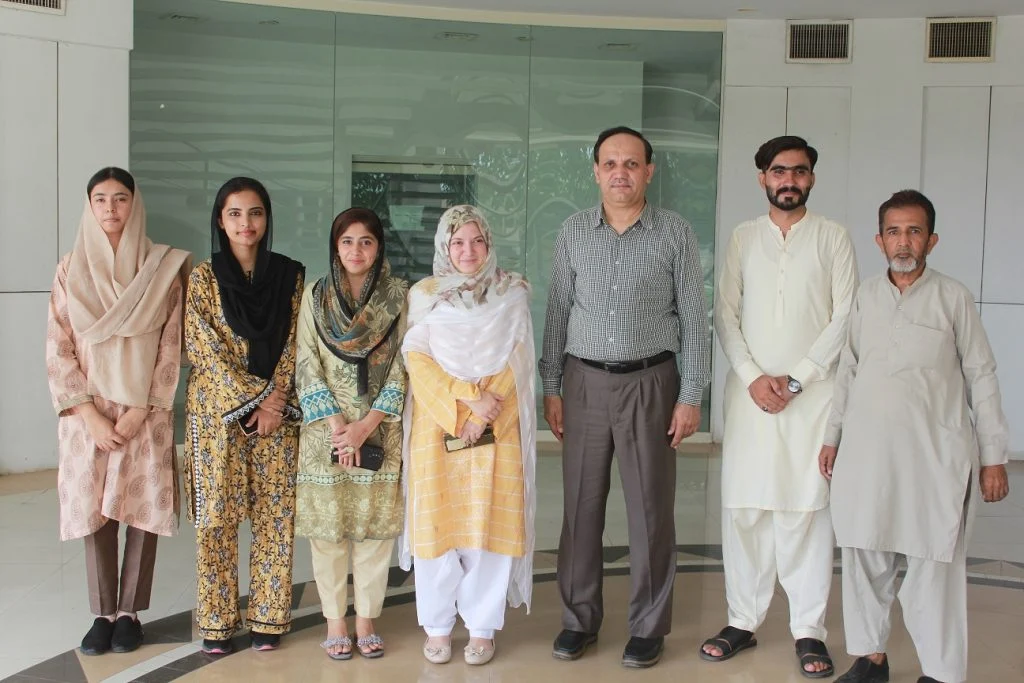
Research group
Faculty leading the programme.
Expertise in human molecular genetics, hereditary disorders and genomic diagnosis.

Research students
The questions shaping tomorrow’s genetic medicine.
6 PhD scholars2 MPhil scholars
PhD research scholars 6

Arooj Arshad
PhD Research ScholarUnravelling the genetic basis of intellectual disability through whole exome sequencing and computational analysis in the Pakistani population

Roha Tariq
PhD Research ScholarResearch title to be finalised
Zakia Riaz
PhD Research ScholarInvestigating the genetic basis of intellectual disability through novel recessive variants · Consortium student, University of Maryland
Saman Khan
PhD Research ScholarThe quest to understand neurodevelopment through the lens of molecular genetics · Consortium student, University of Maryland
Nimra Sardar
PhD Research ScholarConsortium student, University of Maryland · research title to be finalised
Sara Shahid
PhD Research ScholarConsortium student, University of Maryland · research title to be finalised
MPhil research scholars 2

Arooj Fatima
MPhil Research ScholarDecoding the genomics of a rare neurodevelopmental disorder in Pakistan

Muhammad Zeeshan
MPhil Research ScholarExpanding the mutational and clinical spectrum of primary hyperoxaluria
Research funding
Gene discovery supported by HEC.
National Research Programme for Universities grants, with international collaborations at NIH NIDCD, the University of Maryland and Johns Hopkins University.
Completed projects
Collaborate with the lab